Scaffolding safety quick check first, then read the evidence behind the decision
If you were looking for information about scaffolding safety or searching for “about scaffolding safety”, the fastest useful route is not a vague guide. It is a tool that tells you whether the scaffold looks ready, needs fixes, or needs competent-person escalation.
This page is intentionally conservative. It favours documented control, current inspection, and manual discipline over quick reassurance. If you are wondering are scaffold tags a legal requirement, this tool factors in the need for a documented inspection record.
Tool-first promise
The page starts with an action route, not a glossary.
Evidence-backed thresholds
Trigger heights, inspection timing, and tower limits stay traceable to official guidance.
Clear next actions
Every result ends with a next move, including the red route.
The answer changes with scaffold family, fall height, and whether the inspection chain still holds
Broad searches often hide three different needs: a release decision for a standard mobile tower, a control review for a supported scaffold, or a stop-and-escalate decision for a complex configuration. This page keeps those paths separate so the result does not blur safe work into vague reassurance.
Core boundary
No part of this page authorises use of a scaffold with mixed parts, missing edge protection, unresolved overhead risk, or a configuration outside the current manual or design.
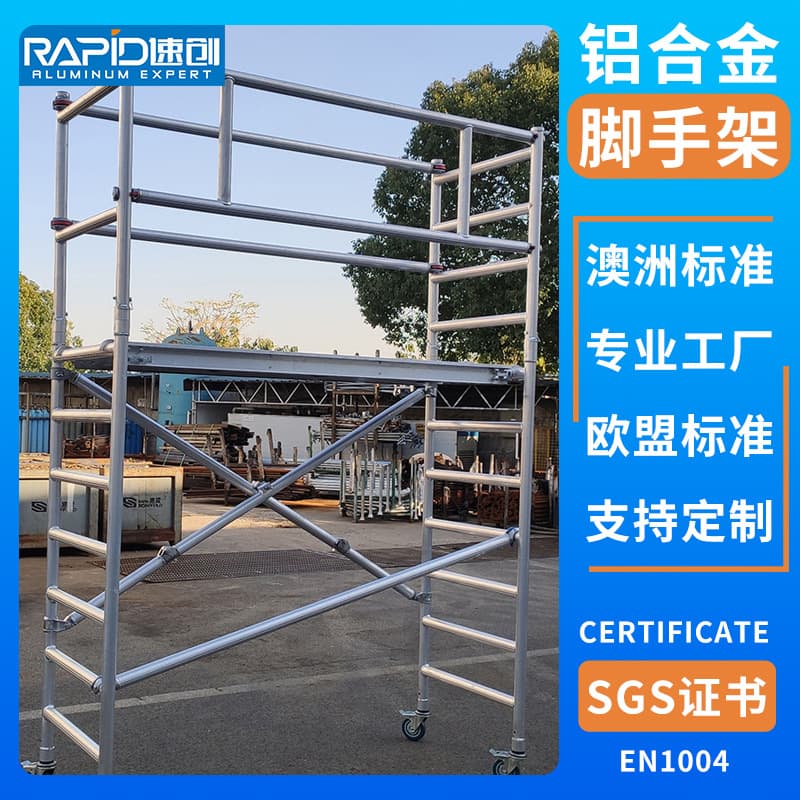
The numbers and signals that change the decision fastest
Best fit
Buyers, supervisors, or site teams who need a fast release-or-escalate answer before a mobile tower or supported scaffold is put into use.
Also useful
Teams handling keyword-intent research like “about scaffolding safety” who still need a real task flow instead of a glossary article.
Not enough by itself
Complex scaffold designs, suspended systems, demolition tie-ins, or jobs with unresolved overhead-clearance risk. Those need design-level review, not a shortcut page.
Four conclusions that keep this page from becoming generic
The five control chains that decide whether work continues
If one of these chains breaks, the page stops treating the job as routine. That is why the quick check pushes so many amber and red results toward manual confirmation instead of false comfort.
| Control | Why it matters | Hard-stop signal | Next move |
|---|---|---|---|
| Ground, wheels, and support | Level, firm support is the first stability assumption for both supported scaffolds and mobile towers. | Soft shoulders, slope, voids, bricks under wheels, or no documented support condition. | Stop use, re-level the base, and confirm the support method against the manual or design. |
| Guardrails, toeboards, and platform edges | Release-to-use logic collapses if basic edge protection is incomplete or the platform edge is uncontrolled. | Missing or incomplete guardrails, missing toeboards where falling-object control is required, or exposed edges during normal use. | Complete the edge-protection system before anyone treats the scaffold as ready. |
| Inspection and records | A scaffold can move from safe to unsafe after alteration, weather, or a change in work shift. | No competent-person inspection, stale inspection interval, or no usable record for the current setup. | Re-inspect and record before restart. Do not inherit yesterday’s release decision blindly. |
| Compatible components and bracing | The strength, stability, and guardrail assumptions depend on all required parts being present and system-compatible. | Mixed parts, missing braces, improvised boards, or uncertainty over whether the configuration is approved. | Pause the job and verify the exact system, manual, and missing components before re-use. |
| Movement and change control | A tower that was safe in one location or state can become unsafe after movement or alteration. | Planned movement with people or materials on the scaffold, or changes made after release without re-check. | Unload, reduce, move from the base only if the guidance allows it, then re-check the scaffold. |
The page uses a multi-jurisdiction threshold model on purpose
Buyers and supervisors often operate across suppliers, regions, or mixed guidance sets. The table below keeps the page honest about which thresholds come from which source and how the quick check uses them.
| Source family | Trigger or rule | How the page uses it |
|---|---|---|
| OSHA / United States | Competent-person inspection before each work shift and after events that affect structural integrity. Fall protection for scaffold work more than 10 feet above a lower level. | The quick check treats stale inspections and unresolved edge protection as a stop signal, not as advisory polish. |
| HSE / United Kingdom | Tower scaffolds inspected after assembly and, for relevant construction use with a 2 metre fall risk, then every 7 days. Towers reduced to 4 metres before movement. | Movement and inspection cadence stay visible in the tool because they change release decisions in real jobs. |
| Safe Work Australia | SWMS for scaffolding work with a risk of a person falling more than 2 metres. High-risk work licence for scaffolding work involving a platform with a fall over 4 metres. | The page uses 2 metre and 4 metre thresholds as escalation markers, especially when the brief is sold as “simple” access work. |
| PASMA / EN 1004 mobile towers | Standard mobile access towers up to 8 metres outdoors and 12 metres indoors. Non-standard tower cases move into other standards and planning routes. | The tool gives a low-friction answer only when the job still looks like a standard tower within that envelope. |
Five source-backed points that turn the page into a decision tool, not a summary article
Reviewed against public sources on Mar 22, 2026. Each row states what the source supports, where the claim stops, and what users should do with that boundary.
| Decision question | Verified finding | Boundary or counterexample | Sources |
|---|---|---|---|
| What counts as a current inspection? | OSHA requires a competent-person check before each work shift and after any event that could affect structural integrity. HSE requires inspection before first use and then every 7 days for construction scaffolds where a person could fall 2 metres or more. Safe Work Australia requires written competent-person confirmation plus at least 30-day inspections for suspended, cantilevered, spur, hung, and other scaffolds with a fall risk over 4 metres. | These intervals are not interchangeable. The right trigger depends on scaffold type, fall exposure, and jurisdiction. | OSHA 1926.451(f)(3); HSE Work at Height FAQ; Safe Work Australia Guide for Scaffold Inspection and Maintenance. |
| Does “under 4 metres” always mean simpler licensing? | No. Safe Work Australia states a licensed scaffolder may still be required when a scaffold under 4 metres sits beside an excavation or another lower level that pushes the fall risk above 4 metres. | Use fall exposure, not nominal scaffold height alone, when the drop beside the scaffold is larger than the tower itself suggests. | Safe Work Australia Tower and Mobile Scaffolds Information Sheet. |
| Is a green tag enough to treat a scaffold as released? | No. HSE says scafftags are not a legal requirement and only supplement inspection records. Safe Work Australia’s guide goes further for higher-risk scaffold categories by requiring written confirmation from a competent person and a handover certificate. | A visible tag can support communication, but it is not the legal or technical substitute for inspection records or handover evidence. | HSE Work at Height FAQ; Safe Work Australia Guide for Scaffold Inspection and Maintenance. |
| When do standard mobile-tower rules stop applying? | PASMA’s product-standard summary says EN 1004-1:2020 covers standard mobile towers from 0 to 8 metres outdoors and 0 to 12 metres indoors. It points cantilever towers, large-deck towers, baseplate towers, linked towers, and towers exposed to wind loads above 0.1 kN/m2 into BS 1139-6:2021 instead. | EN 1004 summaries do not authorise non-standard towers. Once the configuration moves outside scope, this page should escalate rather than force a green answer. | PASMA Product Standards and EN 1004 revision guides. |
| How concrete are ground and stability limits? | OSHA requires supported scaffolds above a 4:1 height-to-base-width ratio to be tied, guyed, braced, or otherwise restrained, and says footings must be level, sound, rigid, and capable of supporting the load. Safe Work Australia adds that when adjustable wheels are used, the slope should not exceed 5 degrees. | The threshold depends on scaffold family. Supported-scaffold 4:1 logic is not a universal substitute for every mobile-tower manual. | OSHA 1926.451(c)(1)-(3); Safe Work Australia Tower and Mobile Scaffolds Information Sheet. |
How the page turns public guidance into a usable safety route
The tool is conservative by design. It does not try to convert every rule into a universal legal answer. Instead, it asks whether the scaffold is still standard, still inspected, still documented, and still within the conditions that let public guidance stay reliable.
Method in one line
Give a confident answer only when the job remains a standard scaffold brief. Push everything else into a documented escalation route.
Reviewed date
Source links below were reviewed on Mar 22, 2026. Public guidance can change, so the page treats dates and provenance as part of trust, not as footer debris.
Evidence hierarchy
Regulator pages, regulation text, and official guidance take priority. PASMA is used only as a secondary source for standard-scope boundaries because the full EN and BS texts are not publicly readable.
HSE tower scaffolds
Official regulator page. Updated 10 Mar 2026. Tower-specific inspection, movement, stability, and manual-chain guidance.
HSE work at height FAQ
Official regulator page. Updated 11 Mar 2026. Construction inspection rhythm, competence, and scafftag status.
OSHA scaffolds in construction
Official regulator page. Scaffold hazard overview and OSHA standard entry points.
OSHA 1926.451
Official regulation text. Inspection cadence, powerline distances, high-wind limits, component compatibility, and footing rules.
Safe Work Australia scaffolding hazards
National policy guidance. SWMS trigger over 2 metres and high-risk work licence trigger over 4 metres.
Safe Work Australia tower and mobile scaffolds
Official guidance page. Published 29 Mar 2017; last updated 19 Mar 2020. Tower/mobile controls, fall-distance example, slope, wheel-lock, and movement rules.
Safe Work Australia scaffold inspection guide
Guide published 19 Mar 2020. Written confirmation, handover certificates, and 30-day inspection rules for higher-risk scaffold categories.
PASMA product standards
Industry-body summary used where full EN/BS texts are paywalled. Distinguishes EN 1004-1:2020 from BS 1139-6:2021 out-of-scope tower cases.
BLS Census of Fatal Occupational Injuries 2024
Official statistics release. Used only for fall-fatality context, not as a scaffolding-specific release rule.
Where the page has evidence, and where it explicitly stops short
Some rules are precise and portable. Others depend on local utilities, project design, or datasets that are not published in a harmonised way. Those items stay marked as limited rather than being turned into fake certainty.
| Topic | What public sources confirm | What remains uncertain | Safe next move |
|---|---|---|---|
| Australian powerline clearances | OSHA publishes explicit scaffold-to-power-line distances, but Safe Work Australia treats overhead electric lines as a scaffolding risk and routes users to dedicated guidance and state or territory regulators. | This page does not publish one national Australian clearance number because no single public SWA page gives a universal distance for all jurisdictions and network conditions. | Treat any unresolved overhead-line issue as a red-route trigger and confirm the applicable local exclusion zone before erection or movement. |
| Global scaffolding-only incident rate | The U.S. Bureau of Labor Statistics reported 844 fatal falls, slips, and trips in 2024, including 370 among construction and extraction workers, but that dataset is broader than scaffolding-only events. | No reliable harmonised public dataset was found for a single global or cross-jurisdiction scaffolding-only fatality rate. | Use incident data as context, not as a release threshold. Base approval on current scaffold controls and local regulator requirements. |
| Mixed-system approval | OSHA only allows intermixing manufacturer components when they fit without force and structural integrity is maintained. Safe Work Australia’s checklist asks whether mixing has been approved in writing by a competent person. | Public guidance alone cannot confirm whether a specific mixed system on your site is approved. | Treat undocumented mixed parts as a hard stop until the manufacturer, designer, or competent inspector confirms the exact configuration in writing. |
Scaffold safety decisions also depend on the access method you choose
The page does not assume a scaffold is always the right access answer. It compares ladders, mobile towers, supported scaffolds, and MEWP-style alternatives because the wrong access method creates safety debt before work even starts.
| Option | When it fits | Where it breaks | Commercial implication |
|---|---|---|---|
| Ladder | Short-duration, low-complexity tasks with limited tool handling. | Repeated lateral reach, longer duration, two-hand work, or material handling. | Cheap to start, but poor when scaffold-like stability is actually needed. |
| Mobile scaffold tower | Short-to-medium duration work where a standard, mobile, manual-defined system fits. | Soft ground, overhead conflict, high wind, complex geometry, or non-standard loading. | Best balance for repeat access if the tower remains standard and inspected. |
| Supported scaffold | Facade, trade access, or broader working areas needing more deck width and tie logic. | When crews try to treat it like a casual access frame without formal inspection and design control. | Higher planning cost, but often the right answer once duration or task width grows. |
| MEWP or specialist access | Restricted footprints, complex geometry, fast repositioning, or jobs unsuitable for a stable scaffold base. | Where ground bearing, operator skill, or rental economics do not work. | May cost more upfront, but sometimes avoids unsafe scaffold improvisation. |
Three example briefs that show how the route changes
| Scenario | Quick outcome | Why | Next move |
|---|---|---|---|
| Indoor maintenance on a level slab using a standard mobile tower | Usually a green or amber route | The job stays within standard tower logic if inspection, manual, guardrails, and ground conditions are all confirmed. | Use the quick check, confirm the tower manual, and keep the change-control discipline visible. |
| External facade scaffold after wind and rain | Amber or red route | Weather exposure and possible deterioration reset the inspection decision before restart. | Re-inspect before use and do not rely on the previous release record. |
| Stair, cantilever, bridged, or mixed-system access | Red route | The setup is outside the page’s standard shortcut zone and needs exact design or competent-person review. | Escalate to manual review with photos, fall height, and configuration details. |
Three risks this page is designed to expose early
The page is built to reduce false confidence. That means it deliberately shows where the answer becomes expensive, unsafe, or too uncertain for a shortcut tool.
Misuse risk
The most common failure in broad safety content is treating a generic checklist as approval for any scaffold type. This page explicitly stops short of approving non-standard systems.
Cost risk
The cheapest route is often misread as the right route. A ladder or under-specified tower can increase stoppage, rework, and incident cost once the task exceeds its real envelope.
Site-mismatch risk
Even correct components fail the brief if the site has slope, live traffic, overhead line exposure, or recent weather changes that were not built into the original release decision.
Questions buyers and supervisors usually ask after the quick check
Send the scaffold brief when the route is amber or red
This is the minimal continuation path when the quick check cannot safely close the loop. Send the real site brief instead of forcing a green answer from incomplete data.
Include the scaffold family, fall-height basis, site photos, ground condition, inspection gap, and any missing controls. That is the fastest way to turn a red route into a concrete review decision.